20 May 2013

Good Greens Salad

DSC_0423

This salad came from a craving for a good green salad, something with a mix of crunchy elements (scallions, fennel), buttery things (avocado, pine nuts), lots of herbs and bold flavors (my homegrown mizuna!). Basically, I went to the market and bought anything green that looked good, and the result was delicious. The quantities here are reminiscent of the way I think most of us cook at home, a bit of this, a pinch of that. You could scale this up for a larger crowd.

Good Greens Salad

2 handfuls small sharp lettuces like mizuna or baby arugula
1 large avocado
1 large fennel bulb, bottom trimmed
a few fennel fronds
1 handful cilantro
1 handful parsley
a few sprigs mint
3 scallions
1/4 cup pine nuts
1 teaspoon sesame seeds
fresh lemon juice, olive oil, and salt, for dressing

 1. Trim the large center core from the bottom of the fennel bulb. Slice the fennel bulb very thinly on a mandoline, then place the fennel in a medium bowl. Chop the fennel fronds, cilantro, parsley, and mint and add to the bowl. Slice the scallions, both white and green parts, on the bias and add to the bowl. Dice the avocado, add to the bowl. Add in the lettuce. Drizzle the lemon, olive oil, and salt over the bowl and toss everything to combine. Toast the pine nuts and add to the bowl with the sesame seeds, toss to combine. Serve.

15 May 2013

What We've Been Cooking

We are off to America - the first time in nearly a year, I fear I may have culture shock - for a much needed vacation. Over the past month or so, our cooking hasn't been too exciting. Revisiting old favorites, lots of vegetables dishes, enjoying spring fava beans, making up recipes for banana cookies. Paul made a delicious chicken with grapes and apples from Claudia Roden's The Food of Spain. Here are some snapshots of what we've been up to.

Making this classic orange-almond cake for a party. (Stencil from Martha Stewart, and yes it's Christmas themed in May, I know.)
DSC_0406
DSC_0403DSC_0404
DSC_0407

Growing lettuce
DSC_0421

Making hummus
DSC_0327

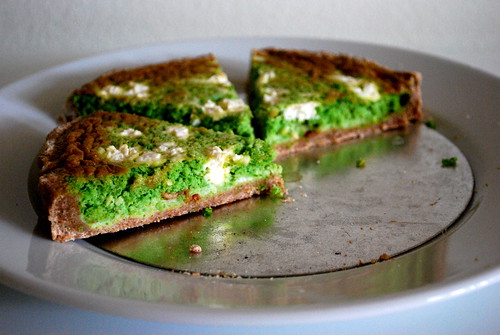
Julia Child's Zucchini Tian - who knew zucchini juice was so green!
DSC_0347DSC_0346
DSC_0352DSC_0354

Brunch - Spinach and smoked bacon frittata, orange/mint salad, (unpictured) Algerian baghir pancakes with honey butter
DSC_0349

Making Pie! An old favorite.
DSC_0381DSC_0384

Local spring strawberries marinated in honey and vanilla bean paste!
DSC_0410

10 May 2013

Paris Recommendations Vol. XII

DSC_0415

Paris. It is the city I probably know best of any foreign city, but I will admit I can at times find it exhausting. I'm not sure why exactly, maybe because we were there with a list of errands to complete (yes, when you live in Algiers, sometime you run errands in Paris over the weekend), but on this trip Paris just wore me out. I took only 3 photos, a record low. Don't get me wrong - walking around, eating delicious food, stopping in cafes, shoe shopping, it was a great change of pace. But mentally, I wasn't really in vacation mode. Luckily for you, reader, we discovered a few new places along the way to share here.

Also, I found my street!
DSC_0411

DSC_0412

Verot Charcuterie
This place immediately caught me eye, with its pickled pigs ears and jellied pigs feet and most beautiful vegetable terrines in the window. It's a tiny place with a take-out section on one side and charcuterie on the other. I brought back an assortment of these tiny bite-sized saucissons that nearly caused a riot in my office. Close to the Luxembourg Gardens and would make a good pre-picnic stop.

E. Dehillerin
A cook in Paris really can't not go to this place. When my mother was a student in France, she bought a whole set of copper pots and pans from here. A couple years ago I had them retinned and they are as good as new, now almost 50 years later. I stopped in for some flexi-pan molds and grapefruit spoons.

Bones
Paul ate here in March - small plates with a set menu, light, fresh contemporary cooking, and not expensive. You have to book far ahead and call the day-of to confirm.

Rose Bakery
Good shopping has really extended up into the Northern Marais, we started at this classic Brit-owned place with brunch and some cookies to go.

Also, a Parisian friend asked us for rec's for a Moroccan place in Paris, if anyone know of one please let us know!


30 April 2013

On Eating in Algiers

DSC_0145
We were driving home two weeks ago when I noticed that all the flags on our route home were at half-mast and that every single radio station was playing Quranic mourning recitations. Concerned, I flipped the radio around until I found a news break where I was able to discern that a former President had died. Subsequently, eight days of national mourning were announced, which meant eight days of no music allowed on the radio, no dance concerts at the arts center. And if I'm going to be frank here- some old guy who was President for a few months decades ago, decamped to Switzerland nearly as many years ago, dies, and I get to practice my Quranic Arabic every morning on my commute? What a bizarre place. I thought I should write about some of Algiers' quirks, but we'll stick to food in this forum. I thought we'd start with eating out (or not, as you may figure by the end of this post).

There is not much of a restaurant culture here. During the civil war in the nineties, which one has to remind oneself is not that long ago since any physical damage to the city has long since been whitewashed over, restaurants were big targets for bombings. As little as ten years ago eating out was considered a dangerous proposition. As such, many restaurants here are done in true speak-easy style - knock on a darkened door, go up to the second floor, and you might find some delicious food and a cold beer. Other restaurants are tucked into hidden corners, down dimly lit allies or in the woods behind the Martyr's monument. Everything is word of mouth, and obviously finding these places can be a challenge. Even then, the selection of good restaurants can be limited.

As for street food, whatever is available in Algiers is pretty limited, only available in certain areas, and most things close up by 6 pm. I've heard there are more options in other cities like Oran. There's lots of "fast food" places, which serve omelets (never have I met a people so obsessed by eggs), sandwiches, salads, and pizza. The sandwiches will almost certainly contain french fries and mayonnaise, and a local favorite is the "sandwich complet viande" which involves scrambled eggs, ground beef, and fries stuffed into french bread. This is a variation on the "plat complet viande" which involves a plate with two ground beef patties, two fried eggs, a salad (often with lettuce and grated beets), and fries.

The other kind of fast food places are little grill stands, where you'll see skewers of the tiniest pieces of meat displayed out front. The skewers often contain things like liver with cubes of fat, or other offal-type cuts. Other streets foods involve croissants and pastries, and m'hjab, an Algerian bread stuffed with spicy tomato sauce (check out this video of mhjab being made, look at how easily the guy can stretch the dough so thinly). Schwarma is also available but is frankly not very good and is often made with that Algerian favorite- turkey. Boureks, the Algerian version of spring rolls, seem like an obvious street food but I know of only one place that runs such a business.

Another oddity of Algiers (as if there weren't enough already), is that despite the overwhelming number of local bread varieties, there are very few actual bread bakeries. Having lived in Syria where there was a bakery rolling pita off the conveyor belt at nearly every corner, I find this baffling. It seems the local subsidized baguettes are trucked in twice daily to your little superette, and then any other breads seem to be made by the shop owner's grandma, or by some other mystery source, which means quality varies greatly from store to store. There are bakeries for pastries but not nearly as many for bread. This would explain why when the other day we were driving and Paul spotted a bakery with the sign "pain traditional" I literally stopped the car in the middle of whirling traffic, pulled onto the side walk to park, and headed over. Once inside, and it was a tiny entryway with trays of freshly baked kesra bread, I gasped at Paul, "they make bread here!"

Towards the end of our time here, I'm planning to do a series of posts on where to actually eat (and visit real bakeries!) in Algiers. As you can imagine, we have quite a bit of recon to do, but hopefully you'll stay tuned.

DSC_0142

19 April 2013

Tahini Rye Cookies

DSC_0379

Tahini rye cookies! I mean, yes, right?! There's something so exciting about them, you can't help but picture the exclamation points (tahini! rye! cookies!) when you see them. All the goodness of nut butter and deep flavor of rye and buttery shortbread rolled into one.

Tahini is surprisingly hard to find in Algeria, where it's not a common ingredient. One of the fancier import groceries sells it, which is good, because tahini is a huge staple in our household. I like to think of tahini as the more versatile cousin to peanut butter, slipping easily between salad dressings, to baba ghanoush to sweets like halva. In Syria mothers spread flat bread with tahini and swirl it with grape molasses (dibs al-ainab), the Arab cousin of PB&J, tucked into every kids' backpack.

Tahini functions in these cookies much like peanut butter would, adding nutty flavor and a nice crumble. I love baking with rye, I think it adds just the right amount of depth to baked goods (the next time you're baking bread try substituting a small amount of the white flour for rye flour and you'll see). These cookies take literally 10 minutes to stir together, contain no eggs, and are ready in no time. Just in time for you to start saying Tahini! Rye! Cookies!

DSC_0380

Tahini Rye Cookies
In order to measure the tahini, I recommend adding the two tablespoons of creme fraiche to your measuring cup first, then add in the tahini until you reach 1/2 cup. If you want to weigh your flour mixture the total weight should be about 260 grams.

150 grams (2/3 cup) sugar
140 grams (9 tablespoons) unsalted butter, softened
1/2 cup minus 2 tablespoons tahini
splash of vanilla extract (about 1/2 teaspoon)
2 tablespoons creme fraiche (can also use heavy cream)
1 2/3 cups all purpose flour
1/3 cup rye flour
pinch salt

1. Preheat oven to 400F. Prepare greased or lined cookie sheets. Mix the all purpose and rye flours and salt in a small bowl.
2. Cream the butter and sugar together in a large bowl, I use a fork to do this, but you can also use a stand mixer. The mixture should be well combined and lightened in color. Stir in the vanilla extract. Stir in the tahini and creme fraiche. Working in batches, stir in the flour mixture until the dough comes together nicely.
3. Using your hands, roll the cookies into small balls (about 1 inch diameter or 20 grams) and place on the baking sheets. Press the cookies down with the tines of a fork to make crisscross marks. Bake the cookies for 15 minutes, or until just barely golden. Cool on a wire rack.

14 April 2013

Butter Lettuce, Orange, and Pistachio Salad

DSC_0377

Paul and I have a disagreement about pepper. Paul thinks pepper should go on everything, like salt. I think salt should go on everything, but that pepper is optional. If you know the two of us at all, you will know that this disagreement can be virulent at times.

Salt, I say, goes on everything, heck, we even have a biological imperative to eat the stuff. Pepper goes on a lot of things, but similarly, I put cumin in a lot of things, and garlic, and ginger, but not in everything. For me, meat always gets salt and pepper. With fish, if it is more delicate, I may go for only salt and lemon. Vegetables will depend totally on how I'm cooking them.

Long ago my mother and I went to Rome, in the cold of January, and her biggest take away from the trip was, "I haven't been using enough pepper in my cooking!" It was true, my mother had basically stopped using pepper, but the more important take away for me was that Roman cuisine - the very stripped back, simple ingredient simple preparation kind of cooking, benefited greatly from that sprinkling of good salt and the fresh cracked pepper. I think of a shaved raw artichoke salad, anointed with percorino romano, olive oil, and salt and pepper.

This salad, for me, is the kind of thing where pepper really works. Butter lettuce with a simple creme fraiche dressing, the last of the winter's navel oranges, and some pistachios. The first time I made this, since we were only having salad for dinner, I dressed it up with some torn prosciutto, a perfect salty foil to the sweet oranges. The next time, for lunch, I tossed in some of the fava beans I was shelling. Both variations, with a crack of black pepper, are excellent.

DSC_0375

Butter Lettuce, Orange, and Pistachio Salad
The recipe makes more dressing than you probably need, which will come in handy for when you make the salad again.

1 large head of butter lettuce, washed and dried and leaves roughly torn
2 navel oranges
1/4 cup pistachios (preferably blanched), toasted and chopped
1 cup fava beans OR 4 oz of prosciutto, torn
1/2 cup creme fraiche
salt, pepper

1. Slice away the peel of the oranges, then, working over a bowl, supreme the oranges, setting aside the orange segments and catching the juice in a bowl.
2. Whisk the creme fraiche and a pinch of salt in with the orange juice to form a dressing.
3. Place lettuce leaves in a bowl and toss with a small amount of the dressing to coat. sprinkle salt over lettuce and toss again. Arrange the orange segments, pistachios, and prosciutto or favas over the lettuce. Drizzle a bit more of the dressing over top. Sprinkle salt and crack pepper over the salad. Serve.

09 April 2013

Apple Honey Swirl Challah

DSC_0342

I would be lying if I said I'd never been on a diet. I think every woman would. But whenever I've felt like I needed to cut back a bit, I've always done it by simple things like smaller portions, snacking less, focusing on fruits and vegetables, getting up and going for walks around the office, exercising. My point is, I've never been on a named diet, no Atkins, no South Beach, no grapefruit diet, no veganism.

DSC_0345 

As someone who has never gone on an elimination diet, I will admit I am fascinated by them. Wait so you can eat tons of sausage but not an apple? Your entire diet has no dairy or legumes? I cannot imagine an existence without wonderful plain yogurt but I can bet it would be sad. We have several friends who have recently gone paleo, which judging by the participants vocal advocation of it, is like the timeshare of diets.

DSC_0334

Basically, I eat a little bit of everything. I don't believe in the low carb craze, but I do think it's a good reminder to look carefully at what you consume every day. I am careful about not eating too many wheat-based things, just like I'm careful about not eating too much red meat, or too much tuna, or too many beets. I almost never eat pasta. I try to eat different colors everyday, reds, browns, oranges, blues, purples, greens. I should point here that red wine is a nice filler for your purple food group.

DSC_0331DSC_0333

This is all a very long-handed way of saying I've been making less bread recently. And cakes and cookies too. But for Easter I wanted to make a challah bread for Paul (it's a bit of a tradition), and I had the last bits of some apple butter brought over from the States to use up. This dough is a breeze, and the olive oil and salt make it particularly delicious and easy to work with. Luckily Paul has no qualms about carbs, because he ate the whole thing.

DSC_0335

Apple Honey Swirl Challah
I originally did not include cinnamon in the filling, but your mind just expects a cinnamon flavor coming from those dark swirls, so I've added it here. Adapted from the Smitten Kitchen Cookbook.

1 packet active dry yeast
5 tablespoons honey
2/3 cup warm water
1/3 cup olive oil, plus more for the bowl
2 eggs for the bread, 1 egg for the egg wash
2 teaspoons sea salt
4 cups flour, plus more for kneading as necessary
1 cup apple butter
1/2 teaspoon cinnamon

1. In the bottom of a large bowl combine the yeast, 1 drip of the honey, and the warm water. Let stand until the yeast mixture bubbles, 5-10 minutes. Add in the remainder of the honey, the olive oil, and the eggs and whisk well. Switch to a wooden spoon, and gently begin add in the floor one cup at a time. Halfway through, or after you've added 2 cups of flour, add the salt, then continue adding the flour. The dough should come together in a sticky mass.
2. Flour your hands and knead the dough vigorously for 5-10 minutes, until very smooth and elastic, adding more flour if needed. You can turn this out onto a board to knead, or you can be lazy like me and just knead it in your bowl. Rub the bowl liberally with olive oil and turn the dough to coat. Cover with plastic wrap and let rise until doubled in size, 1-2 hours.
3. Preheat oven to 375 F. Turn the dough out onto a floured counter and divide in half. Roll one half out into a rough long rectangle, oval shape. Spread the apple butter generously over the dough, stopping short of the edge. Sprinkle half of the cinnamon over top and smooth it into the apple butter with a knife. Roll up the dough into a long log and set aside. Repeat with remaining dough and filling.
4. Gently stretch out each of your dough logs until very long, but don't let the dough break. Cut each log in half so you have 4 dough logs. Arrange the logs in a cross, two logs vertical, two horizontal, with the legs interwoven where they meet. Take each of the "under" logs and jump it over the log to its left. Repeat this jumping until you run out of dough and have a weird-octopus shaped things. Tuck all the ends of the dough under the center.
5. Transfer your loaf to a lined or greased baking sheet. Cover with an inverted large bowl and let rise 45 minutes to one hour. After rising, beat the remaining egg in a bowl and brush all over the dough. Bake the dough for 35-40 minutes, until well browned on top. Let cool on a rack before slicing.